
Finding Strength in Self-Discovery: Psychologist Mariana Ricci’s Journey & Mission

Mariana Ricci’s interest for psychology began at age 17 during her very first therapy session, fascinated by the intricate ways of the mind and how introspection and analysis could help us confront conflicting emotions, heal, and grow. That session planted a seed that would grow into a lifelong passion: helping people untangle their inner struggles and embrace their authentic selves.

Now a registered psychologist in Sydney, Mariana, brings not just professional expertise, but lived experience. As a migrant woman from Latin America, she understands the challenges of uprooting one’s life — the loneliness, the cultural shifts, the struggle to hold onto identity in a new country. “I know what it’s like to feel disconnected,” she says. “That’s why I believe in the importance of strengthening the mind by rediscovering yourself and reconnecting with your core values.”

Healing Beyond Quick Fixes
Mariana practices psychodynamic psychology — an approach that goes beyond short-term relief. She believes lasting change comes from understanding the underlying beliefs and patterns of behaviours shaping our lives.

Her sessions aren’t just about “talking it out.” Instead, she works with clients to explore the roots of their struggles — from relationship breakdowns to anxiety, depression, domestic violence, and personality challenges — and offers tools to rebuild from within. For Spanish speaking clients, she brings a unique advantage: therapy in their mother tongue, paired with a shared cultural understanding.

Clara’s Story: From Pressure Cooker to Peace
One of Mariana’s patients, “Clara” (name changed for confidentiality), a stay-at-home mother of three, seemed to have it all on the outside: a stable family, a comfortable home, a supportive husband. But inside, she felt like a pressure cooker ready to explode. The simmering resentment and anger she carried threatened her relationships — and her sense of self.

Through therapy, Clara uncovered the roots of her rage in childhood patterns: the demand to always be a “good girl” under the shadow of a critical father and a silent mother. In Mariana’s safe space, Clara began to rewrite her story. She learned to set boundaries, speak up, and reconnect with her husband and children from a place of authenticity rather than resentment.

Today, Clara feels like herself again — not just a wife, not just a mother, but a whole person with her own voice and identity. Stories like these, Mariana says, are what keep her committed: “The real transformation is when clients learn to understand their inner dialogue, embrace who they are, and redirect their lives toward their values.”

Breaking Stigma, Building Community
In Australia, Mariana has noticed lingering stigma around mental health. “Many still think seeing a psychologist means something is ‘wrong’ with you,” she explains. She works to break these misconceptions, reminding clients that therapy isn’t a sign of weakness but of courage.

To make therapy accessible and safe, Mariana offers strictly private sessions — no crowded waiting rooms, no chance of bumping into familiar faces. “It’s just me and my client, one at a time,” she says. Confidentiality and trust are cornerstones of her practice.

Beyond her clinic, Mariana is beginning to engage with Sydney’s multicultural communities, attending cultural and health events, networking with GPs and colleagues, and building visibility through word of mouth. She dreams of one day establishing a wellness hub for women, where psychology works hand in hand with other wellbeing services to support holistic healing.

A Therapist Who’s Walked the Path
For Mariana, psychology is more than a career. It’s a vocation rooted in empathy, cultural connection, and her own personal journey. Having sat in both chairs — as patient and psychologist — she offers clients not just strategies but understanding. Her vision is long-term: a ripple effect where each empowered individual passes resilience
and healing onto families, friends, and future generations. “If one person learns how to live
authentically and with resilience, they can inspire others to do the same. That’s how
healthier, happier communities are built,” she says.

About Mariana Ricci
Mariana Ricci is a registered psychologist offering therapy in English and Spanish, with a
focus on relationships, anxiety, depression, domestic violence, and personal growth. She
provides confidential one-on-one sessions via telehealth and plans to expand into face-to-face
sessions soon.


Mariana Ricci Page

Why Change Management Matters in Today’s Australian Market

And Why We Need More Jobs and Business Opportunities in the Sector

Change is no longer an occasional event in the business world, it’s a constant. Whether it’s new technologies, updated legislation, workforce shifts, climate concerns, or economic uncertainty, businesses in Australia are being asked to adapt faster than ever. And that’s where change management comes in.

What Is Change Management?

Change management is the process of planning, supporting, and guiding people and organisations through change. It ensures that changes—big or small—are implemented smoothly, with minimal disruption and maximum benefit. Think of it as the bridge between strategy and execution. It’s not just about the new systems or policies; it’s about how people respond and adjust.

Why Australia Needs More Change Management Jobs and Businesses

In today’s fast-paced environment, Australian companies across all sectors—from government departments to not-for-profits to small and medium enterprises—are facing a wave of transformations. These include:

  • Digital transformation: automation, AI, and new platforms
  • Workforce changes: hybrid work, generational shifts, and skill shortages
  • Sustainability: adapting to climate targets and eco-conscious operations
  • Regulatory shifts: compliance, privacy, and safety requirements

Yet, many organisations don’t have the internal capability to manage these changes effectively. That is why there’s a growing need for trained change management professionals, consultants, and specialised agencies.

By creating more job and business opportunities in this sector, we not only support smoother transitions for companies but also build a more resilient economy.

Benefits of Having Change Management in Your Business

Reduced resistance – Employees are more likely to accept and adopt change when it’s managed with care and communication.

Improved performance – Well-managed change boosts productivity and morale.

Lower costs – Poorly handled change can lead to turnover, mistakes, and delays. Good change management avoids these costly setbacks.

Faster adoption – Training, support, and clear messaging help new systems or processes stick.

Future-proofing – Businesses that manage change well today are better prepared for tomorrow.

When Should You Bring in Change Management?

Change management shouldn’t be an afterthought. You should consider engaging a change professional or team when:

  • Implementing new software or systems
  • Merging with or acquiring another company
  • Restructuring your organisation or team
  • Launching new business strategies or services
  • Addressing employee engagement or culture issues

Even seemingly minor changes can benefit from a structured approach to ensure success.

Challenges Ahead for Change Management in Australia

Despite the growing demand, the change management sector in Australia faces several challenges:

Shortage of qualified professionals: Not enough trained change managers are entering the market.

Lack of awareness in SMEs: Many small businesses aren’t aware of the benefits of change management or can’t afford full-time support.

Fast-paced environments: The pace of change is outstripping companies’ ability to respond effectively.

Cultural resistance: Australian workplace culture often values independence, which can make buy-in for structured change harder to achieve.

Investing in Change for a Better Future

Change is here to stay. To remain competitive, relevant, and resilient, Australian businesses need to embrace structured change management. Investing in the sector—by creating new roles, businesses, and training pathways—will not only improve business outcomes but also strengthen the national economy.

If you are running a business or working in an organisation going through change, don’t go alone. Bring in the right support and take steps now to ensure your team, your clients, and your future success are all on board.

Reflections about social cohesion: a journey to a multicultural society

Throughout history, the strength of civilisations has often been measured not only by their achievements in art, science or architecture, but by their ability to foster harmony among diverse communities. From the communal spirit of ancient Indigenous nations to the cosmopolitan cities of the Ottoman Empire and the peaceful coexistence of communities along the Silk Road, pathways to living together have been as old as humanity itself. These paths were built on shared values of respect, mutual benefit, and the understanding that diversity is not a threat but a resource.

While these examples were not without conflict or imperfection, they remind us that living together in harmony is not a utopian ideal, but a reality that has been achieved at various points throughout time. Tolerance, dialogue, and shared purpose have long served as the foundations of cohesive societies.

Australia’s Multicultural Reality

Australia today stands as one of the most culturally diverse nations in the world. Nearly half of the population was either born overseas or has at least one parent born overseas. From the contributions of First Nations Peoples to the many waves of migration from Europe, Asia, Africa, and the Pacific, multiculturalism has become central to the nation’s identity.

However, this multicultural reality also brings challenges. Immigration policies, particularly in recent decades, have sometimes shifted according to political and economic pressures, leaving migrant communities vulnerable to discrimination, systemic barriers, and exclusion. Public narratives about immigration can fluctuate between celebration and suspicion, often influenced by global events and local media. For many newcomers, the promise of opportunity in Australia is met with the reality of navigating cultural misunderstandings, employment discrimination, and a lack of recognition of overseas qualifications.

Moreover, the impact of these tensions can be particularly acute for people from refugee and asylum-seeking backgrounds, as well as for faith-based communities who may experience Islamophobia, antisemitism, or racial profiling. These challenges not only affect individuals and families but also erode trust in institutions and community relations more broadly.

The Role of Inclusive Narratives

To achieve true social cohesion, it is essential that Australia builds an inclusive national narrative—one that acknowledges the past, embraces diversity, and provides space for all voices to be heard. Such a narrative must not be imposed from the top down, but rather be co-created through open dialogue, cultural exchange, and local leadership.

Inclusive narratives begin with listening. Communities must be supported to share their stories, express their needs, and feel that they are part of shaping the country’s future. Open communication across linguistic, cultural, generational and faith differences is not always easy, but it is vital. When communities are given the platform to speak and to be heard, it paves the way for empathy, understanding and long-term cooperation.

Practical Pathways to Social Cohesion

To move beyond rhetoric and into action, Australia must invest in practical mechanisms that create the conditions for social cohesion. Local spaces—such as community centres, libraries, places of worship, and neighbourhood events—must be funded and equipped to host inclusive activities. These spaces should not only serve as gathering points but also as platforms for cultural expression, civic participation, and conflict resolution.

Government policies and funding models must reflect the diversity of the population, ensuring that multicultural, faith-based, and First Nations communities are equitably represented and resourced. It is equally important to ensure that frontline services—such as schools, health, housing, and justice systems—are culturally responsive and accessible to all.

Inclusive education, intercultural training, and community-led storytelling projects can also help bridge divides. Rather than focusing solely on tolerance, which implies enduring difference, Australia must promote belonging—where every individual sees themselves reflected and valued in the broader society.

Towards a Shared Future

Social cohesion is not an endpoint but a continuous process. It requires deliberate choices, shared leadership, and the willingness to confront hard truths while imagining hopeful possibilities. Creating an inclusive narrative is both a moral imperative and a strategic investment in Australia’s future. It ensures that communities are not only living side by side, but living together—connected, resilient and united in purpose.

As Australia continues to evolve, the question is not whether we will be a multicultural nation—we already are. The question is how we will honour that reality in ways that foster dignity, respect and share prosperity for all.

Understanding CALD Communities: How to Effectively Engage Through the Right Channels and Media

Culturally and Linguistically Diverse (CALD) communities represent an essential and vibrant part of the Australian social fabric. With more than a quarter of Australians born overseas and over 300 languages spoken in homes across the country, engaging these communities in meaningful, inclusive, and culturally safe ways is both a challenge and an opportunity for community service providers.

The way CALD individuals interact with community services is shaped by deeply rooted cultural norms, language proficiency, social identity, past experiences, and levels of trust in institutions. Understanding these dynamics is crucial to building authentic connections and ensuring services are accessible and effective.

CALD communities often prefer to engage with services through familiar and trusted sources. Trust plays a pivotal role, particularly for those who have experienced displacement, discrimination, or systemic exclusion in the past. Trust is more likely to be established when engagement occurs through peer networks, community leaders, faith-based organisations, or ethnic community associations. These sources are not only culturally congruent but also act as informal validators, reinforcing the legitimacy and safety of the service.

Language is another significant factor. While many CALD community members are multilingual, relying solely on English-language communication materials can exclude those with limited proficiency. Community services that provide translated information and employ bilingual staff create a more inclusive environment, reducing barriers to access. Moreover, the mode of communication should be carefully considered. Verbal and visual formats such as radio, podcasts, community television, and multilingual videos often resonate more than dense written materials, especially among older or newly arrived migrants.

The concept of cultural congruence—where services align with the cultural values and communication styles of the community—can greatly enhance engagement. This means going beyond language to include cultural references, shared values, and community-specific priorities in program design and communication strategies. Community consultation and co-design processes are essential tools to uncover these preferences and ensure that services are not only technically accessible, but also culturally meaningful.

Identifying the right channels and media to reach CALD communities begins with understanding their communication ecosystems. Each group may have different preferences depending on their migration history, age profile, level of education, and community cohesion. For example, older migrants may rely more heavily on ethnic radio stations or church bulletins, while younger community members may engage through social media platforms such as WhatsApp, Facebook, or Instagram. Some communities have well-established ethnic newspapers or community centres that act as communication hubs, while others may require more grassroots, face-to-face outreach.

To determine the most appropriate channels, service providers should undertake local mapping exercises, build relationships with multicultural liaison officers or community leaders, and monitor the digital and physical spaces where community members gather and share information. Collaborating with multicultural media outlets and engaging in partnership with ethnic-specific organisations not only improves message delivery but also strengthens the service’s cultural legitimacy.

Ultimately, effective engagement with CALD communities in Australia requires a combination of cultural intelligence, relational trust, and community partnership. Services that actively listen, adapt their communication methods, and work with—rather than for—their communities are better positioned to deliver programs that are both accessible and impactful.

As Australia continues to grow in diversity, building the capacity to engage CALD communities is not simply a best practice—it is a fundamental requirement for inclusive, equitable, and responsive community services.

Emerging Trends in the Australian Community Sector: Preparing NGOs and NFPs for the Next Decade

The Australian community services sector is entering a period of rapid transformation. Driven by technological innovation, evolving social needs, and increasing demands for cultural inclusivity, NGOs and non-for-profit (NFP) organisations will need to adapt strategically to stay relevant and impactful over the next decade.

Below we explore the key trends shaping the sector and how community organisations can prepare for the challenges and opportunities ahead.

The Rise of Hybrid and Hyperlocal Engagement

Over the past few years, hybrid service delivery models have become the norm, blending face-to-face programs with online platforms. This trend is likely to continue and expand, especially as community members become increasingly comfortable accessing services digitally.

At the same time, there’s growing momentum around hyperlocal engagement — empowering smaller neighbourhoods and communities to develop tailored solutions for local challenges. This allows communities to co-design services that truly reflect their unique needs.

How NGOs/NFPs should prepare:

  • Invest in staff training to strengthen digital facilitation and hybrid service delivery skills.
  • Build hyperlocal partnerships to better understand the needs of specific communities.
  • Use data and community feedback to co-design programs that reflect local aspirations.

Digital Inclusion and Technological Integration

The digital divide remains a pressing issue, particularly in rural, remote, and Indigenous communities. With increasing reliance on technology for service delivery, organisations must ensure equitable access to digital tools and literacy programs.

Assistive technologies are also reshaping disability and aged care services, allowing for more personalised, efficient, and client-centred care models.

How NGOs/NFPs should prepare:

  • Advocate for government investment in digital infrastructure for disadvantaged communities.
  • Incorporate digital literacy programs into service offerings.
  • Stay informed and upskill staff on emerging assistive technologies and digital care tools.

Libraries as Expanding Community Hubs

Public libraries are evolving into critical support centres for vulnerable groups, offering not only information but also access to social workers, mental health services, and homelessness support.

How NGOs/NFPs should prepare:

  • Partner with libraries and similar community hubs to extend reach and impact.
  • Explore integrated service models where multiple agencies collaborate under one roof.
  • Leverage library spaces to deliver workshops, outreach programs, and community events.

Youth Leadership and Participation

Younger generations are increasingly driving community initiatives, particularly in areas such as environmental action, mental health, and social justice. Their innovation, creativity and activism are reshaping how community work is approached.

How NGOs/NFPs should prepare:

  • Create leadership pathways and mentoring programs for young people.
  • Establish youth advisory groups to bring fresh perspectives into organisational planning.
  • Develop flexible volunteering and employment opportunities that suit younger demographics.

Culturally Inclusive Service Delivery

As Australia’s population continues to diversify, the demand for culturally safe and responsive services grows. This includes language access, cultural competency, and the inclusion of lived experience from multicultural and First Nations communities.

How NGOs/NFPs should prepare:

  • Invest in staff training on cultural competence and unconscious bias.
  • Employ workers who reflect the cultural diversity of the communities served.
  • Collaborate closely with CALD and Indigenous community leaders to co-design appropriate services.

Innovative Community Events and Fundraising Models

Events that combine social causes with entertainment — such as community sport, music, and arts festivals — are proving to be powerful tools for fundraising, engagement, and building social cohesion.

How NGOs/NFPs should prepare:

  • Embrace innovative event formats to engage broader audiences.
  • Partner with artists, athletes, and cultural groups to create dynamic community experiences.
  • Diversify fundraising efforts beyond traditional grants and donations.

Citizen Science and Community-Led Research

Citizen science projects, particularly in the environmental sector, are empowering everyday Australians to contribute to meaningful research. This participatory approach fosters a deeper sense of ownership and engagement.

How NGOs/NFPs should prepare:

  • Explore opportunities to involve service users and volunteers in data collection and evaluation.
  • Collaborate with research institutions to embed community-based research methodologies.
  • Use citizen data to advocate for policy change and resource allocation.

Addressing Rural and Remote Service Gaps

Equity in service provision remains a challenge for rural and remote regions. The gap in aged care, health, disability, and social services requires ongoing advocacy and innovative delivery models.

How NGOs/NFPs should prepare:

  • Develop mobile, fly-in-fly-out or telehealth service models where feasible.
  • Strengthen local capacity by training community members as service providers.
  • Advocate for sustained funding specifically targeted at regional and remote areas.

Looking Ahead: A Call to Proactive Adaptation

The next decade will require NGOs and NFPs to be more adaptive, collaborative, and future-focused than ever before. This is not simply about adopting new technologies or strategies, but about deeply listening to the evolving needs of communities, co-designing solutions, and remaining flexible in an increasingly complex environment.

By preparing now, Australia’s community sector can continue to play a vital role in creating resilient, inclusive, and empowered communities for generations to come.

© Lobocova Consulting

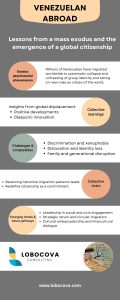
Venezuelans Abroad: Lessons from a Mass Exodus and the Emergence of a Global Citizenry

In recent decades, Venezuela has experienced one of the largest migratory phenomena in the history of Latin America. While much of the global narrative has focused on the political and economic dimensions of this displacement, a deeper analysis through the lens of social psychology and collective behaviour reveals a complex, transformative process at the level of individual and group identity. Venezuelans around the world are not only adapting to new societies—they are shaping new paradigms of global citizenship, intercultural exchange, and human resilience.

The Exodus as a Psychosocial Phenomenon

This mass migration is not merely a reaction to systemic collapse; it represents a collective reconfiguration of identity and purpose. Drawing on Kurt Lewin’s theory of social change, which posits that transformation requires an “unfreezing” of established structures, a transitional stage, and the eventual solidification of a new state, the Venezuelan diaspora is currently situated within a profound state of psychosocial flux.

Migrants often experience what scholars such as José Luis Pinillos identify as migratory grief—a multifaceted process involving emotional, familial, symbolic, and cultural loss. However, through this experience, many Venezuelans are participating in the emergence of a new form of consciousness that transcends national boundaries.

From Exile to Cosmopolitanism: The Rise of the Venezuelan Global Citizen

According to Social Identity Theory (Tajfel & Turner), group membership plays a significant role in shaping self-concept and intergroup dynamics. Venezuelans living abroad are engaging in a dynamic negotiation of identities—integrating into host cultures while also disseminating their values, narratives, and strengths. Through this dual process, we witness the formation of a transnational identity, marked by hybridity and intercultural fluency.

This evolving identity construct is giving rise to what we may term the “Venezuelan global citizen”—an individual who carries their cultural heritage with pride while actively contributing to global dialogue, development, and innovation.

Collective Learnings: Insights from a Global Displacement

Positive Developments:

  • Collective Resilience: The experience of forced migration has catalysed an unprecedented level of resilience, adaptability, and problem-solving capacity. These are not just individual traits but are increasingly embedded in the Venezuelan cultural psyche abroad.
  • Diasporic Innovation: Venezuelans are excelling in diverse fields—technology, healthcare, education, gastronomy, arts, and civil society. Their contributions are reshaping perceptions and actively enriching their host societies.
  • Emergence of Solidarity Networks: Informal and formal networks of mutual aid have proliferated, reinforcing social cohesion and enabling strategic community organising across multiple countries.

Challenges and Complexities:

  • Discrimination and Xenophobia: Many Venezuelan migrants face structural barriers, social exclusion, and stigmatisation. These experiences have significant implications for mental health and social integration.
  • Dislocation and Identity Loss: The psychological toll of migration is marked by a disconnection from place and community, often leading to a sense of liminality or identity fragmentation.
  • Family and Generational Disruption: The migratory process has disrupted traditional family structures, with long-term implications for intergenerational belonging and the socialisation of children in multicultural environments.

Collective Karma and Vision for the Future

From a psycho-spiritual perspective, this exodus may be interpreted as a collective karmic cycle. Venezuela—once a haven for immigrants from Europe, the Middle East, and neighbouring Latin American nations—is now experiencing the inverse. This historical reversal fosters a deepened collective empathy, humility, and awareness of global interconnectedness.

What is emerging is a population that understands citizenship not as a legal designation, but as a moral and existential commitment to humanity. Venezuelans abroad are redefining the notion of national identity, positioning themselves as contributors to a shared planetary future.

Emerging Trends and Future Pathways

  • Leadership in Social and Civic Engagement: Increasing numbers of Venezuelans are assuming leadership roles within community organisations, NGOs, academia, and even local governance.
  • Strategic Return and Circular Migration: A growing cohort of migrants is engaging in circular migration, returning temporarily or permanently with the goal of contributing to national reconstruction and transnational collaboration.
  • Cultural Ambassadorship and Intercultural Dialogue: Venezuelans are increasingly seen as cultural mediators, facilitating intercultural understanding through the arts, education, culinary exchange, and storytelling.

The Venezuelan migration crisis is not only a humanitarian issue—it is also a laboratory of global transformation. Through adversity, a new global identity is emerging flexible, resilient, and consciously engaged with the challenges and possibilities of a shared human future.

From a social psychological standpoint, this mass displacement offers an opportunity to reimagine citizenship, belonging, and the power of collective adaptation. Venezuelans around the world are no longer just refugees of crisis; they are agents of renewal in an evolving global consciousness.

Coaching vs Consulting: What’s the Difference and Why Should Women Embrace Consulting Services?

In today’s fast-paced world, personal and professional growth is essential for success. Many women are turning to external experts to help them navigate challenges, reach their goals, and unlock their full potential. But when considering how to move forward, you may come across two prominent services: coaching and consulting. Both have their benefits, but they serve different purposes. So, let’s explore what sets them apart, the pros and cons of each, and why women should consider consulting services to empower their journey.

Coaching: A Guide for Personal and Professional Growth

Coaching is all about empowering individuals to achieve their personal and professional goals. A coach works with you to unlock your potential, clarify your vision, and guide you toward making decisions that align with your values. It’s more of a collaborative relationship, where the coach helps you tap into your own knowledge and wisdom.

Pros of Coaching:

  • Personal Growth Focus: Coaching is designed to help you improve specific areas of your life or career, such as confidence, communication, leadership, or work-life balance.
  • Empowerment: A coach will empower you to find your own solutions and build confidence in your decision-making abilities.
  • Long-Term Impact: Coaching encourages continuous personal development and mindset shifts, which can lead to lasting positive changes.

Cons of Coaching:

  • Less Structured: Coaching is more open-ended, which may not work for someone seeking a more structured approach to solving a specific problem.
  • Time-Intensive: Achieving long-term results can take time, which means patience and commitment are key.

Consulting: Expertise and Actionable Advice for Business and Strategy

Consulting is more about providing expert advice and solutions for specific challenges, particularly within business, strategy, or operations. A consultant is hired to address particular issues, offer strategic advice, and implement solutions based on their experience and expertise.

Pros of Consulting:

  • Expertise: Consultants bring in-depth knowledge and specialised skills, especially in areas like business strategy, marketing, human resources, or financial planning.
  • Immediate Results: A consultant often provides actionable solutions that can be implemented immediately, making it ideal for short-term, targeted needs.
  • Objectivity: Consultants offer an unbiased perspective and can make tough decisions that may be difficult for an internal team to handle.

Cons of Consulting:

  • Cost: Consulting services can be more expensive than coaching, as they are focused on providing specific, expert-driven solutions.
  • Limited Long-Term Relationship: Since consulting is often task-oriented, the relationship may not provide the long-term support that coaching can offer.

When to Use Coaching vs Consulting

  • Coaching is ideal if you are seeking personal development or if you want to unlock your full potential and need guidance to overcome barriers like self-doubt or time management. It’s perfect when you want to grow in areas like career progression, leadership, work-life balance, or confidence.
  • Consulting is most beneficial when you have a specific challenge or need expert advice in areas such as business strategy, marketing, project management, or systems optimisation. If you’re a small business owner or managing a team and need an outside expert to offer solutions, consulting will help you gain quick, efficient results.

Why Women Should Use Consulting Services

For women, particularly those balancing family, career, and personal growth, consulting services can be a game-changer. Here’s why:

  • Strategic Support for Business Growth: Women in business, whether they run their own startups or are climbing the corporate ladder, often face unique challenges. A consultant can provide targeted advice and actionable strategies to overcome these challenges and help women scale their businesses more effectively.
  • Objective Guidance: Women often juggle multiple roles, which can make it difficult to make unbiased decisions. Consultants bring an objective, outside perspective to help clarify the best path forward.
  • Expertise Where It Counts: Whether you’re looking to improve your business operations, refine your marketing strategy, or manage your finances, a consultant can bring expertise and insights that allow you to make informed decisions and take action quickly.
  • Time-Efficiency: As women often juggle work and family responsibilities, consulting offers the chance to get focused, actionable advice that saves time and accelerates progress without overwhelming you with endless steps.

Empowering Women Through Coaching and Consulting

Coaching and consulting are both valuable services that can help women thrive. While coaching focuses on personal empowerment and long-term growth, consulting is more about solving immediate challenges with expert guidance and actionable solutions. By understanding the differences between these two approaches and knowing when to use them, women can make informed choices that will accelerate their growth, whether in their personal lives or careers.

If you’re ready to take charge of your future, embrace the power of consulting services to gain expert advice, implement solutions, and transform your business or personal journey today!

Posted inNews

Bringing Families Together Through Innovation and Empathy: The Story of Link Kin

From a young age, Jackeline Giovannucci was drawn to the world of social services. Growing up in Venezuela, her first experience of volunteering was at a Cerebral Palsy Foundation, where she helped raise funds for those in need. This early passion for helping others guided her career choices, eventually leading her to study Criminology. “I’ve always believed that everyone deserves a second chance,” she says, reflecting on her journey into the field.

When Jackeline moved to Australia, she continued to work in roles that supported vulnerable populations—specifically survivors of violence, abuse, and children in need of protection. It was during this time that Jackeline saw firsthand how policies meant to protect families and children often fell short in real-world application. She realised that there was a significant gap in services, one that her business, Link Kin, could fill. Through her business, Jackeline is not only aiming to provide essential services but also to bridge the divide between policy and practice, ensuring that families receive the support and justice they truly deserve.

Meeting Critical Needs in the Community

Link Kin is focused on tackling the gaps that exist in child protection, family support, and professional development for those working with vulnerable children and families. One of the most pressing issues Jackeline identified is the shortage of qualified professionals available to facilitate crucial family time, especially in cases where families are separated by court orders or other interventions. Children in these situations often require supervised contact or temporary care arrangements, but the number of trained professionals available to facilitate these services remains far too low.

Link Kin is filling this gap by offering reliable, compassionate, and professional supervision services, ensuring that children can maintain safe, meaningful connections with their families. Jackeline’s business also provides training for educators, social workers, and other professionals who are mandated to report concerns about child protection. Many of these professionals struggle to interpret the guidelines, resulting in unnecessary reports that overwhelm the system and divert resources from the most urgent cases. Jackeline’s training helps them navigate these complex guidelines, ensuring that reporting is accurate and effective.

A Unique Approach to Social Services

What sets Link Kin apart from other service providers in this field? For Jackeline, it’s all about using technology to make services more efficient and accessible while also supporting both clients and professionals. “I’m working on developing a streamlined procedure that reduces costs and improves efficiency for families and workers,” Jackeline explains. With the integration of modern technology, clients can easily book, reschedule, or cancel services, removing delays and errors often caused by human interaction.

Moreover, Link Kin is focused on a collaborative approach. Jackeline is building a team of experienced professionals who work across multiple disciplines to manage and share risk in child protection, family support, and child wellbeing. By working together in this way, the team can deliver better service outcomes for vulnerable families.

A Touching Moment of Reconnection

Despite being in the early stages, Link Kin has already made a significant impact. One of Jackeline’s most memorable experiences was helping a child in out-of-home care reconnect with his father after more than 12 years of separation. “The look on the child’s face when he saw his dad again—it was as though he had just seen his superhero,” Jackeline recalls. “That moment is something I’ll never forget. It really reinforced why I do this work.”

This is just one of the many ways Jackeline has made a real difference in people’s lives, helping families rebuild connections and professionals understand their mandatory reporting duties. These experiences are what keep her motivated to continue building Link Kin into a trusted and impactful business in the Illawarra community.

Flexible, Compassionate Services That Meet Community Needs

One of the reasons Link Kin is so successful is its focus on flexibility and responsiveness. Whether it’s the families it serves or the professionals it works with, Jackeline ensures that every part of the business is designed to meet the unique needs of the community. By providing culturally sensitive and evidence-based support, Jackeline’s team helps families stay connected and safe, all while relieving the pressure on strained child protection systems.

With the use of a digital platform that makes scheduling easy for clients and workers, Link Kin has become a reliable and efficient service that understands the demands of today’s families. Jackeline’s commitment to fairness is evident in the way she handles cancellations, providing a transparent policy that ensures clients aren’t penalised for unforeseen circumstances. This commitment builds trust, making families feel supported through every step of their journey.

Overcoming Challenges and Staying Committed to Families

Starting a business is never easy, and Jackeline faced the added challenge of being a new parent at the same time. With a four-month-old baby at home, Jackeline had to develop effective time management strategies and find a balance between her personal and professional life. “I rely on support from family and friends to help me balance everything,” she says. “It’s tough, but it also fuels my passion for providing services that support other families in similar situations.”

Despite these challenges, Jackeline’s commitment to her business has only grown stronger. By using flexible work processes, she’s able to dedicate time to both her baby and her business without sacrificing the quality of the services she provides.

The Future of Link Kin

Looking ahead, Jackeline has big plans for the future of Link Kin. As she continues to build strong relationships with clients and subcontractors, her goal is to expand her services to reach even more families in need. “The flexibility that my business offers will continue to be a key factor in our growth,” Jackeline says. With a system that allows subcontractors to choose shifts and work around their personal schedules, Jackeline ensures that both clients and workers experience a high level of satisfaction.

Through a digital platform that supports easy booking and scheduling, Link Kin is poised for continued success. As the business grows, Jackeline plans to deepen her relationships with key stakeholders, ensuring that her services always meet the evolving needs of the community.

The Importance of Seeking Social Services

In today’s world, social services play a crucial role in supporting families through difficult times. Whether dealing with financial hardship, family disputes, or child welfare concerns, social services can offer guidance, stability, and resources to help people navigate these challenges. For those who may be hesitant to reach out, Jackeline has a simple message: “Seeking help is a sign of strength, not weakness. These services are here to help, and they are non-judgmental and confidential.”

At Link Kin, Jackeline’s team is working tirelessly to dispel misconceptions about social services. Many people believe that these services only intervene in crises or take a punitive approach. However, Link Kin’s focus is on early intervention and preventative measures, helping families stay together and thrive.

Long-Term Impact on the Community

Looking to the future, Jackeline sees Link Kin playing a pivotal role in the long-term development and wellbeing of the Illawarra community. Through her innovative approach that combines technology with a person-centred model, Jackeline is creating a service that not only meets the needs of families but also provides a sustainable, supportive environment for workers.

As Link Kin continues to grow, Jackeline’s mission remains clear: to make meaningful family connections possible, through innovation, professionalism, and empathy.

If you’re looking for reliable, compassionate services in the Illawarra region, visit Link Kin to learn more about how they can support your family’s needs.

Author Jacqueline Lobo, from Lobocova Consulting

Posted inNews